
80-Mil TPO Roofing in Shreveport, LA
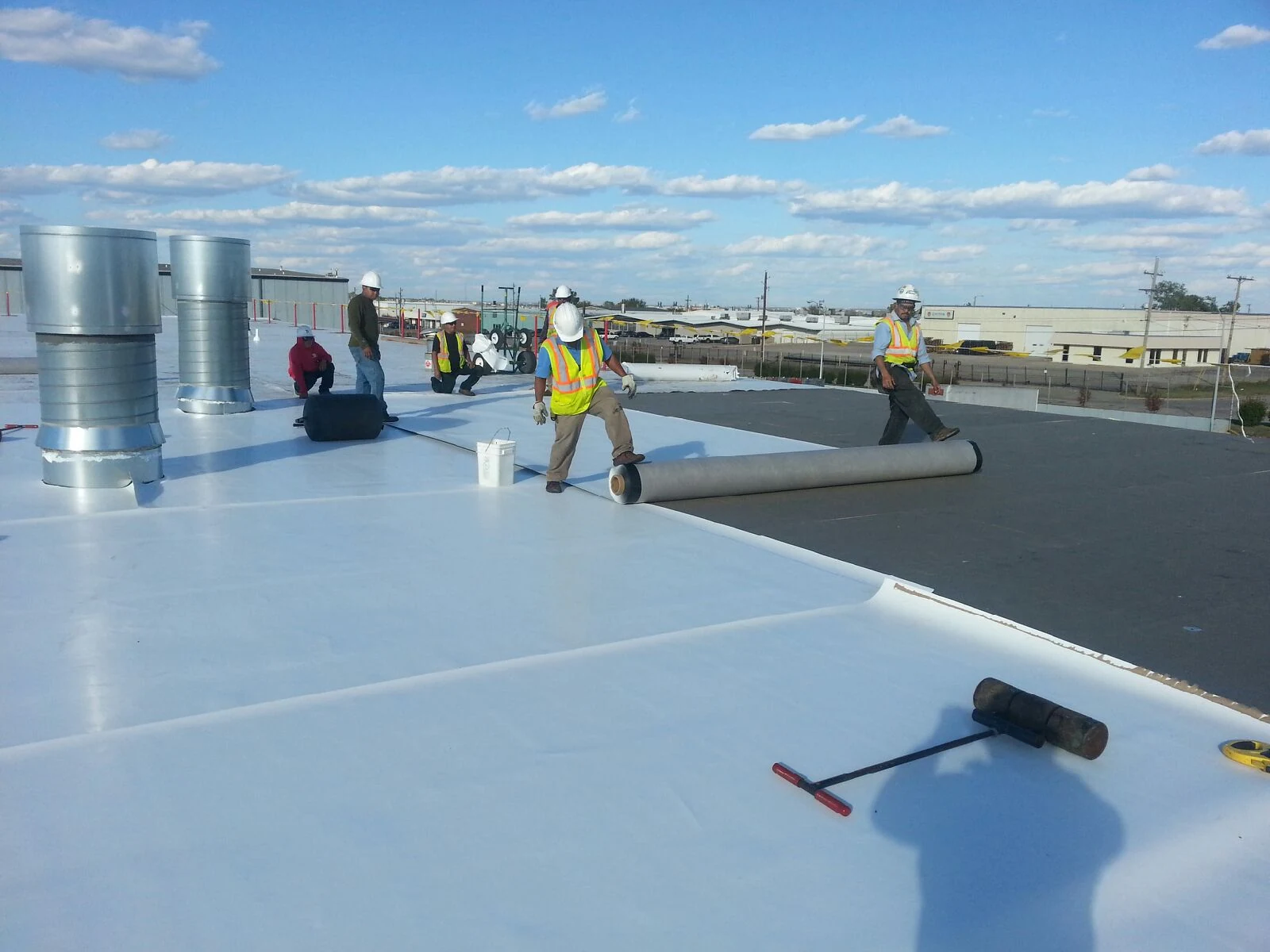
80-Mil TPO for Roofs That Take Real Rooftop Traffic
Eighty-mil TPO is the heavier of the two thicknesses we install, and it earns its higher line-item cost on buildings where the roof deck functions as a working surface rather than a passive lid. Manufacturing plants along the I-20 corridor, distribution buildings, and casino back-of-house rooftop mechanical yards in Bossier City all fall into that category. The extra mils buy puncture resistance for foot traffic, ladder work, and rooftop equipment servicing that a 60-mil sheet wasn't built to absorb.
Reading a Roof's Traffic Profile Before Specifying Thickness
We walk the deck before quoting membrane thickness, and we're looking for specific signs: worn paths between rooftop units, ladder scuffing near access hatches, tool marks near mechanical curbs. On a plant roof serving heavy HVAC and process equipment, that traffic pattern is constant, and it's the same reasoning that pushes us toward 80-mil on casino properties where the back-of-house kitchen exhaust fans, chillers, and generator equipment all sit on the same deck a maintenance crew is walking multiple times a week.
If a building doesn't show that traffic pattern, we'll say the 60-mil sheet is the more defensible spend. Overspecifying membrane thickness on a low-traffic roof doesn't buy service life; it just moves budget away from a building that actually needs it.
Hail Resistance and Ark-La-Tex Storm Cells
This part of Louisiana takes hail seriously, usually from the same spring convective cells that bring the straight-line wind. Eighty-mil TPO's added thickness gives a meaningfully better puncture-resistance margin against hail impact than the 60-mil sheet, which matters on a plant roof where a compromised membrane means water finding its way to process equipment below rather than only an office ceiling tile.
We document hail exposure the same way we document install quality: photos of any impact marks, dated, tied to storm events where we can confirm them against weather records rather than assuming every dimple in the membrane is storm-related.
Rooftop Mechanical Yards and Dock Traffic
A distribution building's roof usually has more rooftop mechanical equipment per square foot than the building footprint suggests, and every one of those units needs a curb, a flashing detail, and periodic technician access. Eighty-mil TPO holds up to that access pattern better over the membrane's service life, particularly around curbs where techs set tools and parts down without thinking about what's underneath them.
- Traffic-pattern walk of the existing or planned rooftop equipment layout
- Membrane thickness matched to actual foot-traffic and ladder-access frequency
- Reinforced walkway pads at primary access routes between units
- Curb and equipment-pad flashing detailed for repeat technician access
- Post-install seam probe with hail-exposure baseline photos on file
Welding in Summer Heat and Humidity
Deck surface temperatures on a dark substrate climb fast once the Louisiana sun is on it, and that changes how the membrane handles under the hot-air welder well before ambient air temperature would suggest a problem. We shift welding to early mornings on 80-mil tear-offs and re-covers specifically because afternoon deck temperatures make weld consistency harder to hold across a large plant or distribution roof.
Every seam gets probed before the crew signs off, and on a larger 80-mil roof that's a multi-day process broken into completed sections rather than one pass at the end of the job.
Budget Conversations for Heavy-Use Roof Assets
For an FM managing capital across several buildings, 80-mil TPO is usually the higher line item in the portfolio, and it should be. We'll walk through why a specific building justifies it rather than asking you to take our word for a blanket recommendation. If a roof's traffic profile doesn't support the extra cost, we'll tell you that too.
We also build the maintenance plan around the traffic pattern once the membrane is down, because a heavy-use roof needs more frequent walkway inspection than a low-traffic one, even with the thicker sheet installed.
Coordinating Roof Access With Casino and Plant Operations
A casino property in Bossier City doesn't stop running while a roof crew is working overhead, and a manufacturing plant on a production schedule doesn't shut a line down for a re-roof either. We plan access routes, staging areas, and material hoisting around whatever operation is happening below, and we coordinate noise-generating work like tear-off demolition with the building's own schedule rather than assuming the roof is ours to run however's convenient for the crew.
On a casino back-of-house roof specifically, that means working around kitchen service hours and keeping exhaust equipment functional throughout the project, since taking a commercial kitchen's ventilation offline mid-shift isn't something either of us wants to explain to the health inspector.
Questions Facilities Managers Ask About 80-Mil TPO
Is 80-mil overkill for a mid-size office building?
Usually, yes, unless that building has unusually heavy rooftop mechanical traffic. We'd rather steer that budget toward the 60-mil sheet and put the difference toward a building that actually needs the heavier membrane.
Does 80-mil TPO cost meaningfully more to install?
The material cost is higher and welding takes marginally longer per linear foot of seam, but on a heavy-traffic roof the added service life and reduced puncture-repair calls usually justify it over the ownership period.
How much hail does 80-mil TPO actually resist?
No membrane is hail-proof, but 80-mil's added thickness gives a real margin over 60-mil against smaller to moderate hail. Large hail can still compromise any single-ply membrane, which is why post-storm inspection matters regardless of thickness.
Can 80-mil TPO go over an existing roof without a full tear-off?
Sometimes, if the existing deck and insulation are dry and sound. We evaluate that with a core cut before recommending a recover over a full replacement.
What maintenance schedule fits an 80-mil roof with heavy equipment traffic?
We'd recommend inspection at least twice a year, plus a walkway-pad check any time new rooftop equipment gets added or a maintenance contractor changes.