Black EPDM Roofing in Shreveport, LA
Where Black EPDM Still Makes Sense on a Shreveport Roof
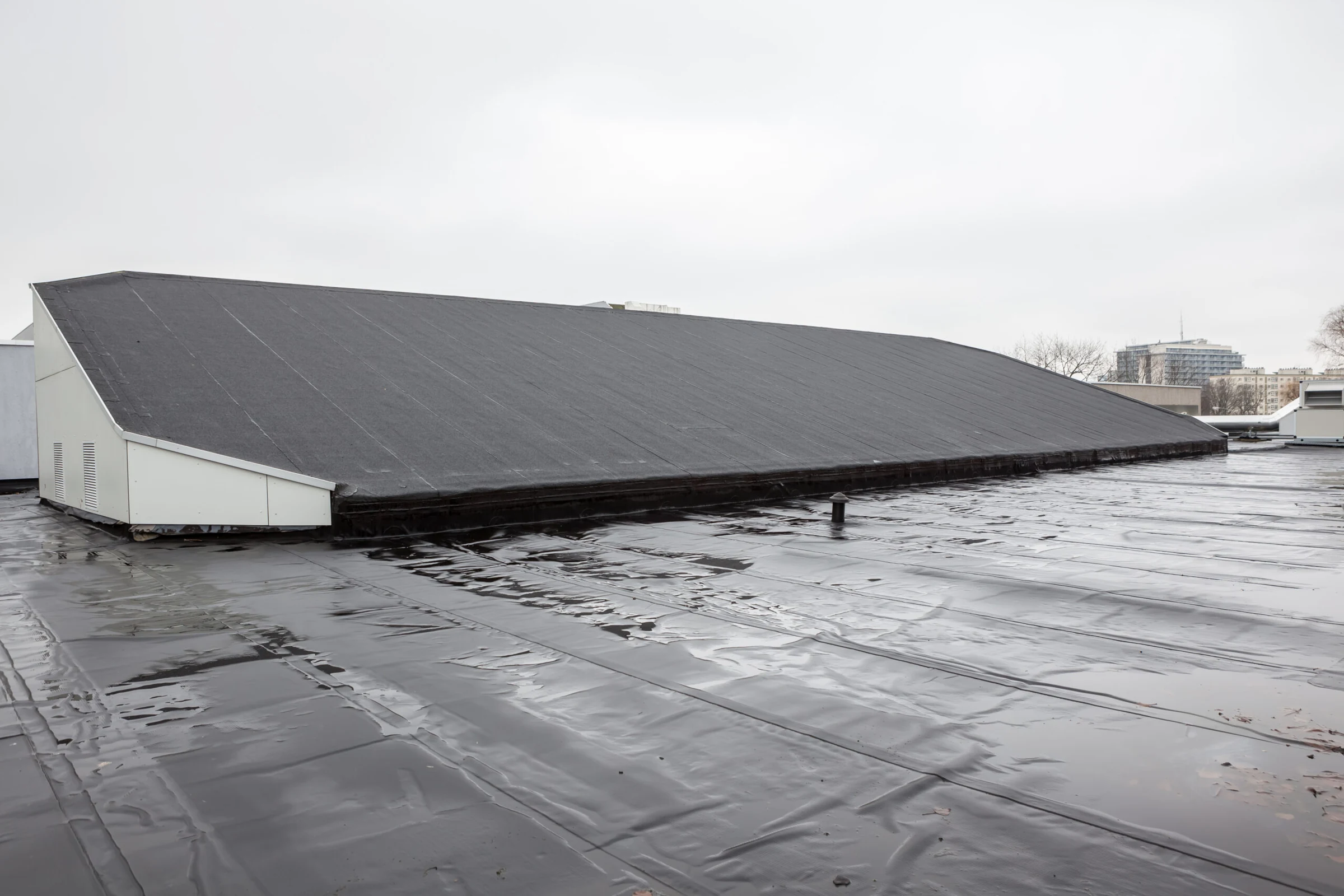
Black EPDM isn't the default recommendation it was twenty years ago, but it still earns a place on certain roof assets in this market, particularly older manufacturing and warehouse buildings where reflectivity isn't the deciding factor. It's a simpler field seam than TPO, taped rather than hot-air welded, and that simplicity has real value on a roof where a maintenance budget is tight and the building isn't carrying a heavy cooling load off that surface.
Legacy Manufacturing Buildings and Recover Economics
A fair amount of Shreveport's older commercial building stock is manufacturing space built decades ago, often with minimal rooftop-driven cooling demand because the space below isn't conditioned the same way an office building is. On that kind of roof, the cooling-cost argument for a white membrane doesn't carry the same weight, and black EPDM's lower material cost and simpler seaming make it a defensible recover option over an aging built-up roof.
We still walk the deck and check insulation condition before recommending it. EPDM over wet insulation is the same bad idea as any other membrane over wet insulation; the seaming method doesn't change that math.
Field Seaming in Humid Conditions
Taped seams handle Ark-La-Tex humidity differently than welded seams do. There's no weld-window discipline the way there is with TPO, but seam prep still matters: the surface has to be clean and properly primed before the tape goes down, and humidity affects how that primer cures. We don't rush that step because a rushed seam prep on a taped membrane fails the same way a rushed weld does, just on a different timeline.
We probe every seam before signing off the job, same as we would on any single-ply install, and the records go in the same file.
The Reflectivity Tradeoff, Stated Plainly
Black EPDM absorbs more solar heat than a white membrane, full stop. On a conditioned office building or a medical facility where cooling load matters to the tenant, we'd steer toward white EPDM or TPO instead. On an unconditioned warehouse or a manufacturing building where the roof's job is keeping water out rather than managing rooftop unit run time, that tradeoff often doesn't matter enough to pay a premium avoiding it.
- Deck and insulation moisture check before any recover recommendation
- Seam primer application matched to humidity and dew point conditions
- Taped seam inspection and probe before the crew leaves the roof
- Flashing detail at every parapet, curb, and penetration
- Written recommendation on reflectivity tradeoff before the contract is signed
Wind Uplift on Older Deck Assemblies
A lot of the buildings where black EPDM makes sense also have older deck assemblies, and wind uplift resistance depends as much on the fastening pattern and deck condition as it does on the membrane itself. We test fastener pull-out on these roofs before finalizing an attachment pattern, because an aging deck can hold a fastener differently than a new one, and that changes what pattern actually protects the building during a spring storm line.
Ballasted EPDM is an option on some flat, low-slope buildings with adequate structural capacity, but we check the deck's load rating before recommending ballast rather than assuming it will work.
What This Means for a Facilities Budget
For an FM weighing a recover option against a full tear-off on an older manufacturing building, black EPDM is usually the lower-cost path if the deck checks out dry. We'll lay out the tradeoff against a TPO recover in the same conversation, because the right answer depends on the building's cooling profile and how the roof gets used day to day, not a blanket preference for one membrane over another.
We also flag when black EPDM isn't the right call, particularly on buildings where a tenant has started conditioning space that wasn't conditioned when the roof went up. That shift changes the reflectivity math even on an otherwise industrial building.
EPDM on Flat Warehouse Roofs With Minimal Rooftop Equipment
A straightforward warehouse roof with two or three rooftop units and no other equipment clutter is close to the ideal use case for black EPDM. Fewer penetrations means fewer places for a taped seam to go wrong, and a simple deck like that doesn't punish the membrane the way a plant roof loaded with curbs and ductwork would. We see this pattern on distribution buildings off I-20 where the roof's only job is keeping the racked inventory below dry.
Where a warehouse roof starts accumulating equipment over time, whether from a tenant build-out or an HVAC replacement project, we revisit the membrane recommendation rather than assuming the original spec still fits a deck that's changed since the roof went on.
Questions Facilities Managers Ask About Black EPDM
Is black EPDM outdated compared to TPO?
Not outdated, just narrower in where it fits best. On unconditioned or lightly conditioned buildings where cooling load isn't the driver, it remains a reasonable, lower-cost option.
Does black EPDM shorten a roof's service life compared to white membranes?
Not on its own. Service life depends more on installation quality, deck condition, and maintenance than membrane color, though the added thermal cycling on a black surface is a factor worth weighing on marginal decisions.
Can an existing black EPDM roof be coated white later?
Yes, that's a common path if cooling costs become a bigger concern after the roof is already installed. We'd inspect seam and membrane condition first to confirm it's a good coating candidate.
How do taped seams compare to welded seams for long-term reliability?
Both are reliable when installed correctly. Taped seams depend more on surface prep and primer cure conditions, which is why we don't rush that step regardless of humidity.
Is ballasted EPDM an option for our building?
Only if the structure can carry the additional dead load. We check the deck's rated capacity before recommending it, since not every older building was designed to carry ballast.