White EPDM Roofing in Shreveport, LA
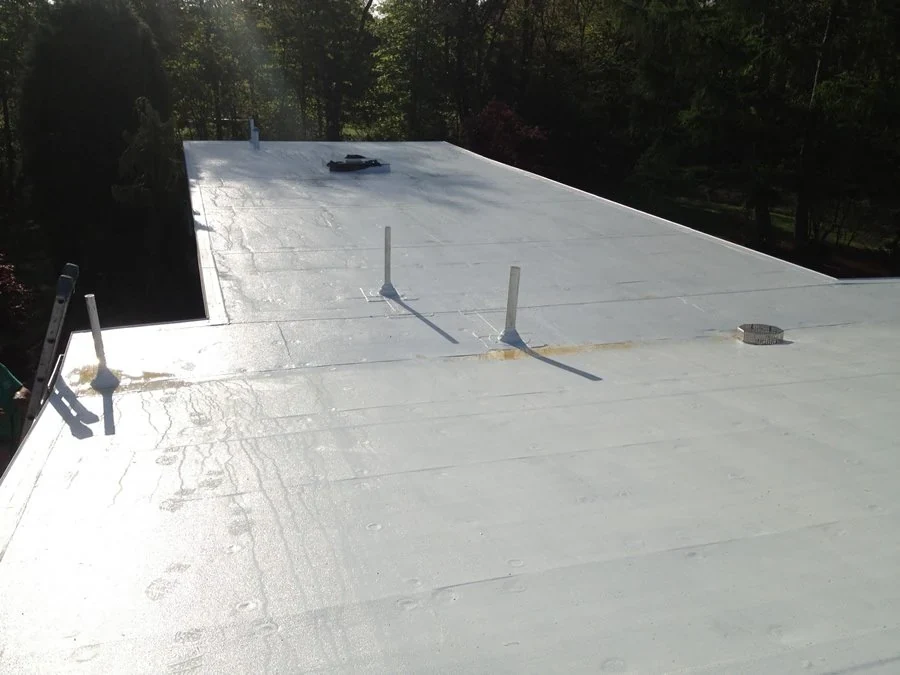
White EPDM for FMs Trying to Cut Rooftop Unit Run Time
White EPDM gives owners rubber membrane's flexibility and field-seam simplicity with a reflective surface instead of a heat-absorbing one. We spec it most often on medical office buildings along the Ochsner LSU Health corridor and administrative buildings where tenant comfort complaints and rooftop unit run time are both things an FM actually gets measured on.
Why Reflectivity Shows Up in a Work Order Log
A dark roof surface pushes more heat into the building envelope and makes rooftop units work harder to hold setpoint, especially through a Shreveport summer that sits in the 90s for weeks at a stretch with humidity working against every unit on the roof. When a rooftop unit is already running near its capacity limit on a hot afternoon, that extra thermal load from a dark membrane is often the difference between holding temperature and a tenant comfort call landing on your desk.
White EPDM doesn't eliminate that call volume, but it takes one variable out of the equation, which matters when you're already managing aging rooftop equipment on a deferred replacement schedule.
Reflectivity Decay and Realistic Expectations
We tell owners upfront that a white membrane's reflectivity is highest on day one and declines from there. Humidity in this region promotes algae and mildew growth on membrane surfaces faster than a drier climate would, and that staining cuts into reflectivity well before the membrane itself is due for replacement. Periodic membrane washing is a maintenance line item worth budgeting for if reflectivity matters enough to justify the white membrane in the first place.
We don't oversell the cooling-cost benefit. It's real, but it's incremental, and a building with undersized or aging rooftop units will still need a mechanical fix regardless of membrane color.
Field Seaming and Install Timing
Taped seams on white EPDM follow the same discipline as black EPDM: clean surface prep, correct primer application, and attention to humidity and dew point during install. We don't change our seam standard based on membrane color, and every seam gets probed before the crew leaves.
- Rooftop unit inventory and run-time review before recommending a membrane
- Deck and insulation moisture check ahead of any recover decision
- Taped seam prep matched to dew point and surface temperature conditions
- Flashing and curb detail checked penetration by penetration
- Membrane wash-down schedule discussed for reflectivity upkeep
Medical and Administrative Building Considerations
Medical office buildings carry a different downtime tolerance than a warehouse. Rooftop work above occupied exam rooms or lab space needs sequencing that limits noise and interior disruption, and we plan install schedules around occupied hours rather than treating every roof the same way. On buildings with equipment sensitive to temperature swings, like imaging suites, we coordinate closely with facilities staff before opening any section of the deck.
Tenant notification matters as much as the technical spec on these buildings. We'll give you the language for that notice if you need it, because a surprised tenant calls the building office before they call maintenance, and that call lands on you either way.
Wind Uplift and Storm Season Fastening
The same spring storm lines that bring hail through this region bring the wind that tests a roof's fastening pattern. White EPDM's attachment method, whether fully adhered, mechanically fastened, or ballasted, gets engineered to the building's wind zone rather than a generic code minimum, because a marginal pattern shows its weakness at the parapet edge during exactly the kind of fast-moving line that comes through here with little warning.
We document fastener spacing and pull-out testing on every install so that record exists if a wind claim comes up years later.
Reading Building Automation Data Before Recommending a Membrane
Most medical office and administrative buildings in this market run a building automation system that logs rooftop unit run time, and that data tells us more about a roof's real cooling burden than a walk-through ever could. If an FM can pull run-time trends showing units cycling near capacity through the summer, that's a stronger case for white EPDM's reflectivity benefit than a general assumption about the building's age or exposure.
We'll ask for that data before finalizing a membrane recommendation where it's available, because it turns a subjective color preference into a decision backed by the building's own operating history.
Questions Facilities Managers Ask About White EPDM
How much does white EPDM actually reduce cooling costs?
It reduces heat gain through the roof assembly, which helps rooftop units cycle less on hot afternoons, but the size of that benefit depends on insulation levels and unit condition. It's a contributing factor, not a fix for undersized equipment.
Does the white surface stay white in this climate?
Not indefinitely. Humidity here promotes algae and mildew growth that dulls the surface faster than in a drier region. Periodic washing helps but reflectivity does decline over the membrane's service life.
Can we install white EPDM over an occupied medical building without shutting down operations?
Usually yes, with sequenced access and clear tenant notice. We plan sections to limit noise near sensitive spaces and keep the deck weathertight at the end of every shift.
Is white EPDM more expensive than black EPDM?
Slightly, due to the membrane compound, but the cost difference is usually small relative to the total project and worth it on a conditioned building where reflectivity has real value.
What's the maintenance difference between white and black EPDM?
White membranes benefit more from periodic washing to preserve reflectivity. Beyond that, seam inspection and flashing checks follow the same schedule regardless of color.