Medical Office Building Roofing in Shreveport, LA
Every Tenant Suite Adds a Roof Penetration Somebody Has to Track
A medical office building near the Ochsner LSU Health corridor or along Youree Drive rarely keeps the same tenant mix for long. Practices move in, build out exam rooms and imaging bays, add rooftop equipment for their specific specialty, and move on a few years later. We deal with the roof consequences of that turnover more than any other property type in this market.
Multiple Tenants, One Roof, and a Lot of Buried History
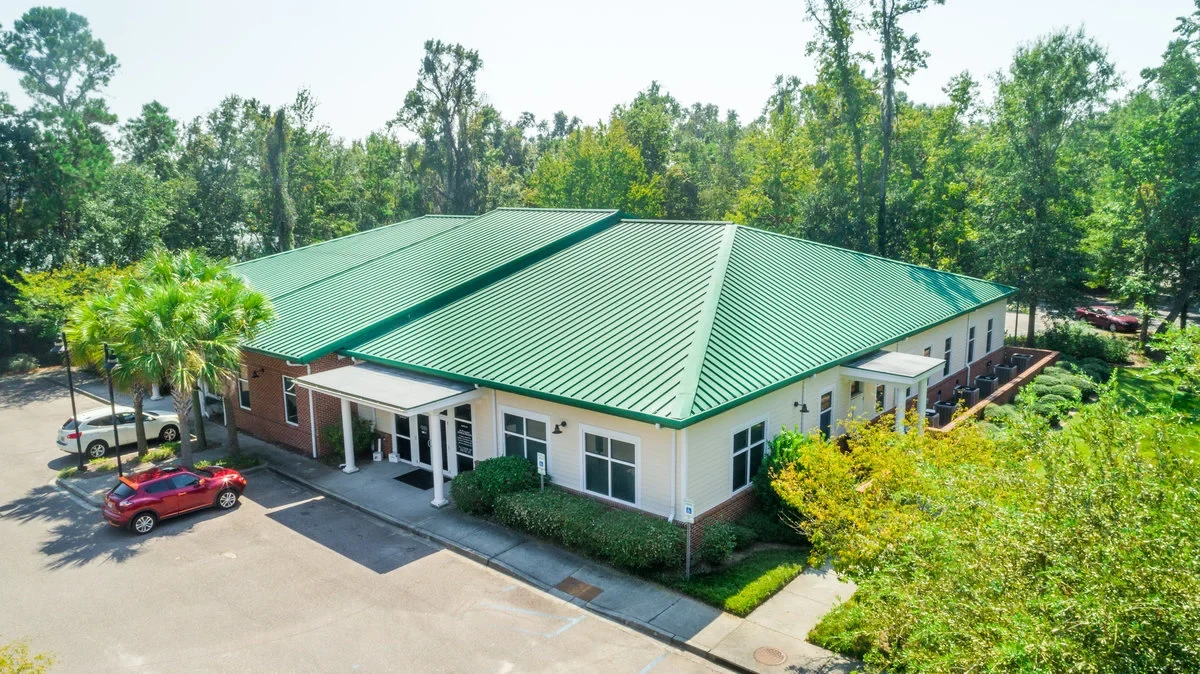
A single-story or low-rise MOB typically has one roof system serving four, six, sometimes a dozen suites, each leased and built out on its own schedule. An imaging practice adds a dedicated condenser curb for equipment cooling. A dermatology suite adds exhaust for a procedure room. An urgent care tenant adds a second rooftop unit when the original HVAC couldn't handle its patient volume. None of that shows up on the original roof drawings, and property management is often the only party who's seen every tenant's build-out over the years.
Before we recommend anything, we ask property management for whatever tenant improvement history they have and walk the roof matching it against what's actually up there. It's common to find rooftop equipment that nobody can identify the owner of anymore because the tenant that installed it has since moved out.
Lease Turnover Timing Matters More Than It Looks Like It Should
Roof work over a vacant suite is simple. Roof work over an occupied exam room or procedure space means coordinating around patient appointments, and most medical tenants won't tolerate noise or vibration during active clinical hours. We've found the practical window is often narrow, early morning before the first patients arrive or evenings after the last one leaves, and we plan crew scheduling around that rather than a standard eight-to-five workday.
Vacancy between leases is also the best window for anything more invasive. When a suite turns over, that's frequently the right moment to address a roof section that's been showing early signs of trouble but wasn't worth disrupting an active tenant to fix.
Rooftop HVAC Density Is the Real Driver of Wear
Medical office buildings tend to carry more rooftop HVAC tonnage per square foot than a standard office building, because imaging equipment, lab space, and procedure rooms all need tighter climate control than a typical suite. That density means more curbs, more foot traffic from HVAC service techs, and more wear concentrated around mechanical zones than you'd see on a comparable retail or office roof.
We pay particular attention to the walkway paths HVAC technicians actually use, since repeated foot traffic on unprotected membrane near rooftop units is one of the more common ways a roof develops soft spots that don't show up as a leak until months later.
On a standing inspection at a medical office building, this is what we're checking:
- Every rooftop curb and its documented tenant of record, or lack of one
- Condition of membrane along HVAC technician walkway paths
- Flashing integrity around procedure-room exhaust and specialty equipment vents
- Ponding near roof drains serving multiple suites with different roof ages
- Interior ceiling staining in shared corridors and common areas between suites
- Sealant condition at pipe boots added during recent tenant build-outs
That inventory becomes part of the record we hand back to property management, section by suite, so the next lease negotiation or roof budget conversation has real information behind it instead of guesswork.
Coordinating With Whoever Actually Owns the Repair
One of the more frustrating parts of MOB roofing is sorting out who's responsible for a given repair. A leased suite's HVAC curb might be a tenant responsibility under the lease, while the membrane around it is the landlord's. We don't try to settle that question for the property manager, but we do document conditions clearly enough that it's obvious what's failing and where, which makes that conversation between landlord and tenant faster.
Our commercial roof leak repair work on MOBs almost always starts with that documentation step, because a repair that gets billed to the wrong party creates more friction than the leak itself.
Planning Ahead of Budget Season
Property managers running medical office portfolios usually work on annual capital budget cycles, and a roof section that's five years from needing replacement is a very different line item than one that's failing now. We try to give that lead time whenever we can, flagging sections that are still functional but showing the early wear patterns that tend to precede a bigger problem two or three budget cycles out.
Questions We Hear From Medical Office Property Managers
Who's responsible for roof damage caused by a tenant's rooftop equipment?
That depends on the lease terms, but we document exactly what's damaged and where the equipment sits so property management has clear facts to work from when sorting out responsibility.
Can roof repairs happen during business hours without disrupting patients?
Sometimes, if the work is isolated over a non-clinical area like a mechanical room or storage suite. Anything directly over exam or procedure space usually needs to happen outside clinical hours.
What happens to old rooftop equipment left behind by a former tenant?
We flag it during inspection and let property management decide whether to remove it, since abandoned curbs and units are common points of membrane failure if left unaddressed.
How often should a multi-tenant medical building roof get inspected?
At least twice a year, plus a walk-through anytime a new tenant build-out adds rooftop equipment, since that's when new penetrations get cut into the existing system.
Does a roof recover work over an occupied medical office building?
Often, yes, if we can sequence it suite by suite and keep noise and vibration outside clinical hours. A full tear-off usually needs more disruption than a recover does.